A conversation to bridge the language gap and find my own meaning
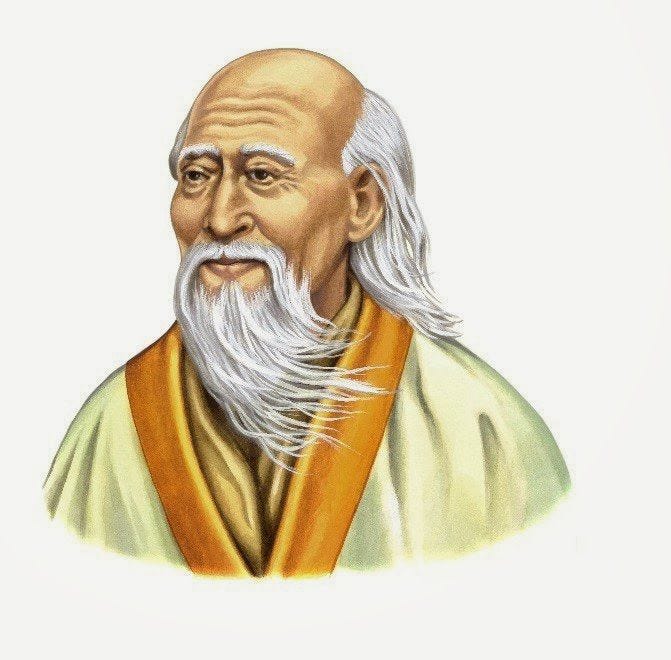
Chinese writes with characters instead of an alphabet, and that gives it an unusual way into understanding reality.
Western languages tend to cut the world into separate units. Chinese packs meaning more densely, with each idea tied to others.
So Chinese concepts often resist word-for-word translation. Their meaning opens up slowly and depends on the cultural and philosophical setting around them.
I put together this glossary as a reference for finding my way through Chinese thought, in three areas: cosmology, Confucianism, and Taoism.
The definitions are my own reading of each concept. I refined them in a Tao study group and in several conversations with LLMs. They are a starting point, and I expect them to change as I keep studying, but for now they give me a framework for living well.
I. Chinese cosmology
- Tian (天). Heaven, the cosmos. In Confucianism, the natural order, destiny, and the source of morality.
- Yin yang (陰陽). Opposite forces that complete each other and together govern the universe.
- Wu xing (五行). The Five Phases, often called the Five Elements: wood, fire, earth, metal, and water. They describe the basic forces of nature and how each gives rise to or checks the others.
II. Confucianism
A. The Five Constants
- Ren (仁). Benevolence, humanity, compassion. The highest virtue, love directed toward others.
- Yi (義). Righteousness, justice, moral duty. Knowing what is right and doing it.
- Li (禮). Ritual, etiquette, propriety. Showing respect and keeping social order through custom and manners.
- Zhi (智). Wisdom, knowledge, understanding. Moral judgment shaped by reason and experience.
- Xin (信). Good faith, integrity, honesty. Keeping your word, which lets people trust each other and holds society together.
One more belongs beside them:
De (德). Virtue, moral power, excellence. All the cultivated virtues together in one person, whose example draws others toward doing right.
B. Other core virtues
- Xiao (孝). Filial piety. Respect and care for parents and ancestors, the root of family life.
- Zhong (忠). Loyalty. Doing your utmost for the people and the common good you are bound to.
- Yong (勇). Moral courage. Standing up for what is right when it costs you.
- Shan (善). Goodness, kindness. Mencius taught that human nature is born good and must be cultivated.
C. Related ideas
These show how the Confucian virtues work in practice:
- Junzi (君子). The noble person. The ideal of a virtuous, wise, and cultured human being.
- Shu (恕). Empathy, reciprocity. Confucius’s version of the Golden Rule: “Do not impose on others what you do not wish for yourself.”
- Wen (文). Culture, the arts, learning. Moral and spiritual refinement that comes from cultivating them.
III. Taoism
A. Core concepts
- Tao (道). The Way. The first principle of reality, present everywhere and beyond human purpose or reasoning.
- Ziran (自然). Spontaneity, “so of itself”. Living in step with the way the natural world organizes and unfolds itself without effort.
- Pu (樸). The uncarved block. Original simplicity, reached by stripping away conditioning, ego, and social constructs.
- Zhen (真). Authenticity, truth, sincerity. Living according to your true nature.
- Wu wei (無為). Non-action, effortless action. Acting in harmony with the Tao, without clinging to results.
B. Virtues and desirable states
- He (和). Harmony, unity. The balance and inner peace that come from living in accordance with the Tao.