A conversation on how Chinese tradition weaves perception into the eternal
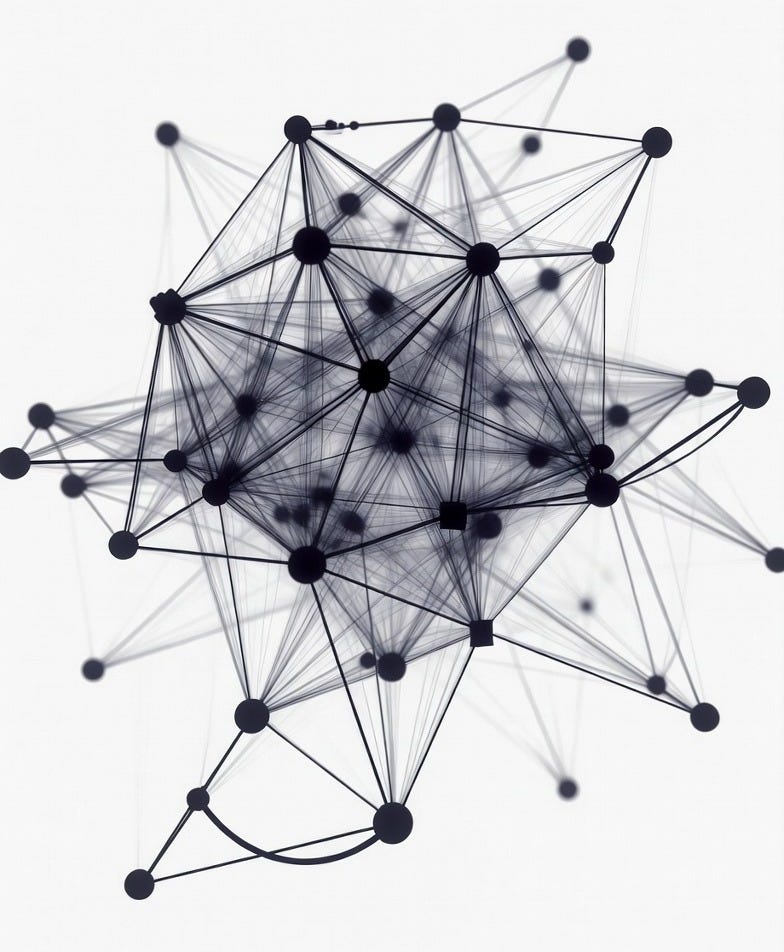
A modern English word points at a thing. A Chinese word participates in it, and it changes the person who speaks it.
I’ve learned this slowly, over years of friendship with Taiwanese families. Their language weaves through reality instead of labeling it. A single character like 火, fire, can connect to a color, a season, an organ, an emotion, a sound, a direction, and a virtue at once. Where English gives you a node, Chinese gives you a node with edges to everything.
In hypergraph terms, a Chinese word has high connectivity. It sits where many dimensions of perception meet. Because of that, speaking it communicates an idea and also makes you more coherent.
智, wisdom
The writing system works the same way.
Take 智, the character for wisdom. It is built from sun 日, arrow 矢, and mouth 口. Read slowly, 智 suggests that to be wise is to be illuminated, to perceive correctly, and to name what you have seen. One character holds three ideas.
I wrote more about this in an earlier essay on 智, where I set its three components beside three verses from John’s Gospel.
Chinese characters are ideas with their own internal structure, and the writing system is a web of them.
五行, the five movements
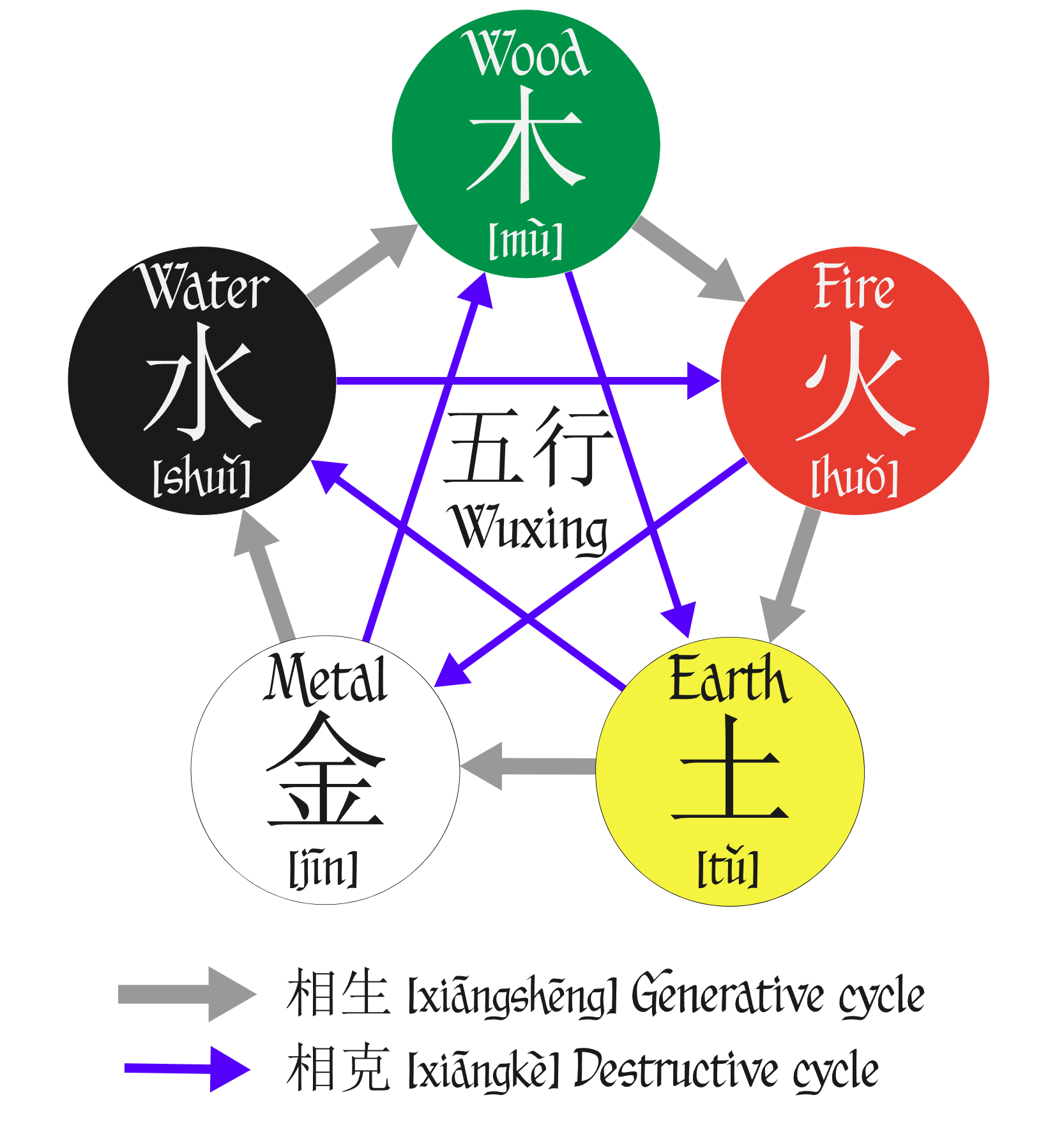
The Wuxing 五行 is a scheme of five movements. Nearly every traditional Chinese field uses it to explain a wide range of phenomena, including medicine, philosophy, astrology, music, martial arts, and governance.
Most Western readers hear “Five Elements” and picture wood, fire, earth, metal, and water as five substances, like the Greek elements. But 行 means movement, not element. The Wuxing describes how things transform into one another, not what they are made of.
The weaving
Each movement gathers a whole range of perceptions into one group.
- Wood is spring, green, wind, the liver, anger, the eyes, sour taste, the sound of shouting, the direction east, and the virtue of benevolence.
- Fire is summer, red, heat, the heart, joy, the tongue, bitter taste, the sound of laughter, the direction south, and the virtue of propriety.
- Earth is late summer, the center, yellow, dampness, the spleen, pensiveness, the mouth, sweet taste, the sound of singing, and the virtue of faithfulness.
- Metal is autumn, white, dryness, the lungs, grief, the nose, pungent taste, the sound of weeping, the direction west, and the virtue of righteousness.
- Water is winter, black, cold, the kidneys, fear, the ears, salty taste, the sound of groaning, the direction north, and the virtue of wisdom.
The knot
To a Western reader this may feel disorienting. What does the liver have to do with spring? What does grief have to do with the lungs? Why would a color, a taste, and a virtue share the same movement?
The groupings are not arbitrary. They come from centuries of watching how things hang together at different levels. The Chinese tradition noticed that certain things resonate together and built a framework to keep track of them.
The result is a perceptual knot. It ties together parts of experience that a Western mind would not think to connect, and once tied, it holds.
The self-fulfilling word
The part I think is genius comes next.
Consider red. In the Wuxing, red belongs to fire, along with the heart, joy, summer, and propriety, 禮 lǐ. Propriety is the virtue of right relationship, which includes courtesy and knowing how to honor another person.
Here is what the tradition did with that.
Red
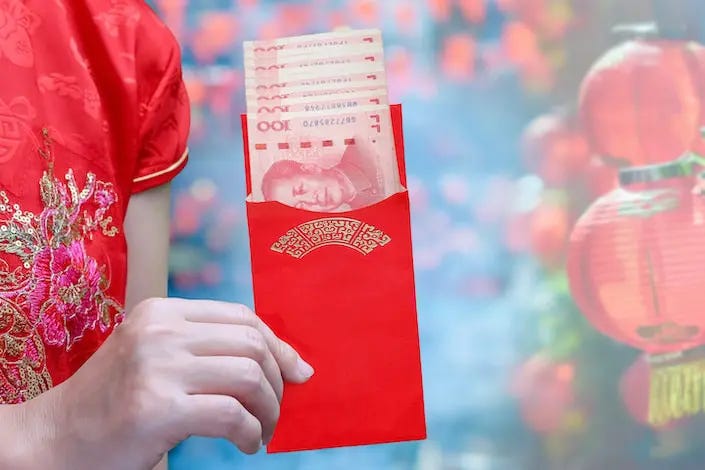
The red envelope, 红包 hóngbāo, carries courtesy in Chinese culture. You give one at New Year as a blessing, at weddings as a gift, and to people who helped you as repayment. Courtesy, thanks, and honor all come wrapped in red.
Over centuries and billions of these gestures, red absorbed the meaning it was given to carry. Red is now courtesy made visible, more than a symbol of it.
The tradition tied red to right relationship and then acted on it so faithfully, for so many generations, that the link is now a fact and no longer a convention. Nobody decided it. A whole civilization made it true by doing it.
Hearing more than was said
I think this explains something I noticed with the Taiwanese families.
In conversation, they sometimes heard things in my words that I hadn’t meant to say, as if words carried more edges for them. They picked up more of the threads.
It worked the other way too. My instinct was to pull threads apart and follow one line of reasoning to see where it led. A Western logical mind untangles. Sometimes my untangling brought out connections they held implicitly but had never named on their own. Both sides gained from the exchange.
Still, I always felt my approach fell short. To receive the whole knot of what they meant, and not a single thread, I would need far more context and cultural training than a few years of friendship could give.
Chinese is a technology of language, refined over millennia. It trains the mind to perceive resonance across many levels at once. The Western mind instead got very good at reaching clarity by separating things and putting them in sequence.
The cross on the ground
I have seen this technology at work in a community.
The Taiwanese families I know belong to the Tao community in South America. It is a tradition brought to Brazil that combines Taoist wisdom with other spiritual traditions, including Christianity.
Modern textbooks draw the Wuxing as a circle with a star inside it. The outer ring traces the generating cycle and the inner star traces the controlling cycle, with one movement at each of the five points. Older Chinese cosmology set the five on the compass instead: Wood east, Fire south, Metal west, Water north, and Earth at the center. A cross.
The Tao community looked at that old cross and saw the Cross.
The shape was Chinese. The reading is not. The Cross works as a bridge in both directions. It rereads the Chinese framework through a new center, and it sets the Christian symbol inside a cosmology.
土
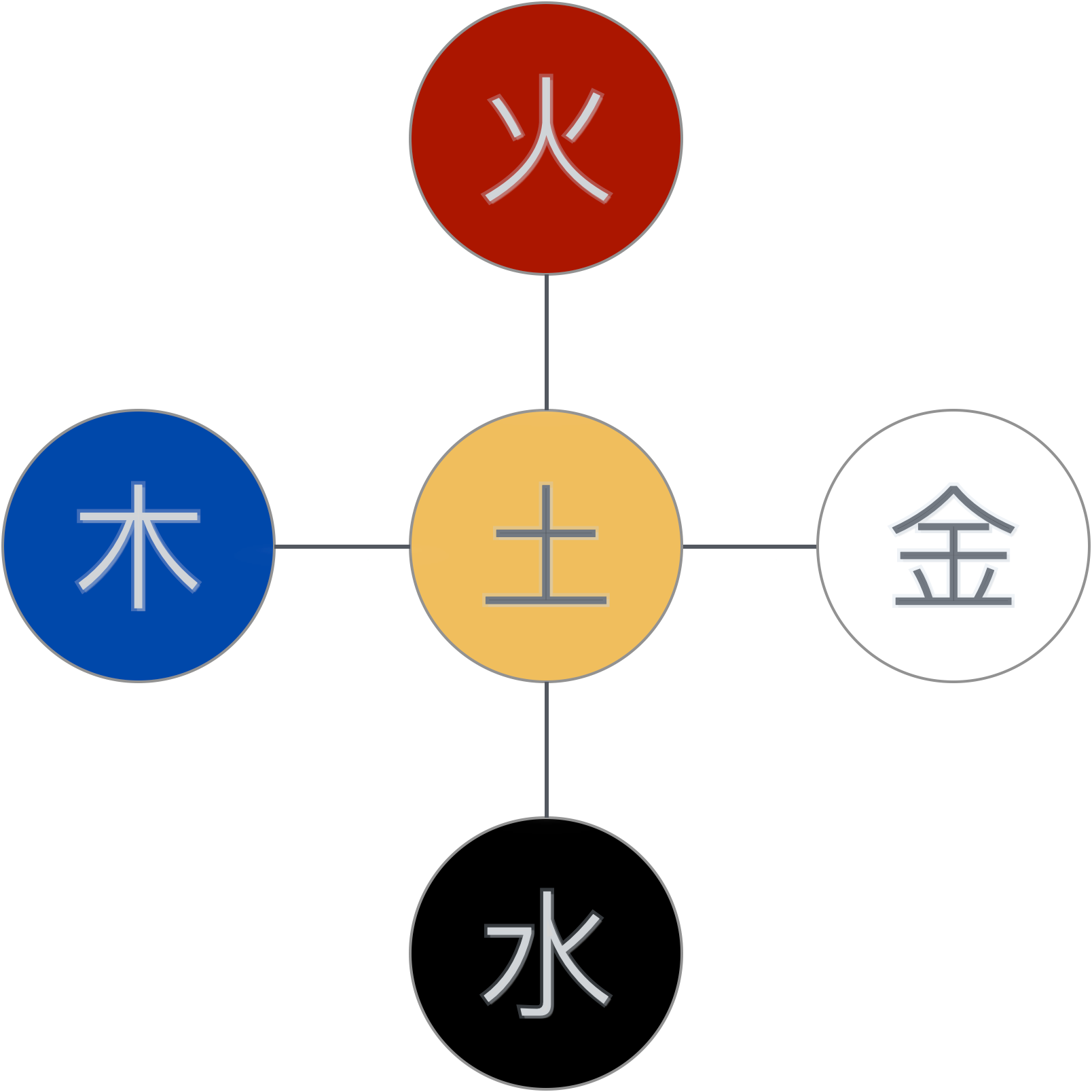
In the Wuxing cross, Earth sits at the center. Its character, 土 tǔ, is a cross standing on the ground.
They teach that Earth’s virtue, 信, is faith. You can rely on the ground because it is firm and you can root in it. Earth is the still point that every transformation turns around. If you lose your faith, you lose your ground.
I wrote earlier about the bold decision to translate John 1:1 as 太初有道, “In the beginning was the Tao.” Missionaries in China heard the Tao and recognized the Logos, a bridge built in language. Missionaries in South America saw the Wuxing and recognized the Cross, a bridge built in geometry. It needs no translation, only eyes that see the shape was already there.
Some words gather meaning instead of pointing at it.
太初有道。In the beginning was the Tao.